Showing posts with label easy sewing projects. Show all posts

Friday, January 25, 2013

Tap, tap...anyone there?

Hello, bloggy land! Did you miss me? Wait, don't answer that.

Although I haven't blogged in 6 months (!!!), that doesn't mean I haven't been busy crafting, sewing and crocheting. In fact, quite to the contrary. The good news is that I always photograph everything I make with the intention of sharing it here, so I now have enough blog material for rest of the year. ;)

Let's dive right into it, shall we? How about a crafty Christmas wrap-up?

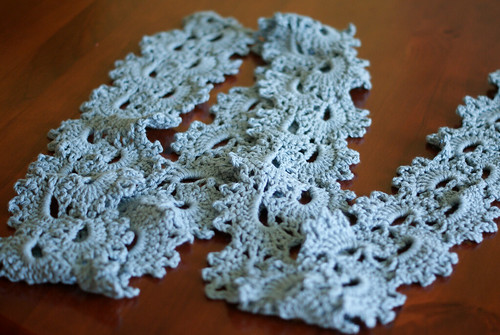
First up, a queen anne's lace scarf.  It's a little messy looking if you don't block it, but some light blocking worked wonders! I know I always say this, but I want one for me now!

 Queen Anne's lace scarf 
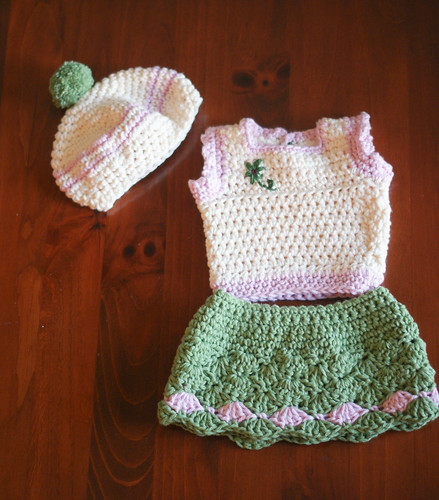
I made two of these doll sets for my sister and niece's American Girl dolls. Apparently the fit is not great, though. Guess I need to pay attention to gauge when I'm crocheting clothes!

 Doll Set 

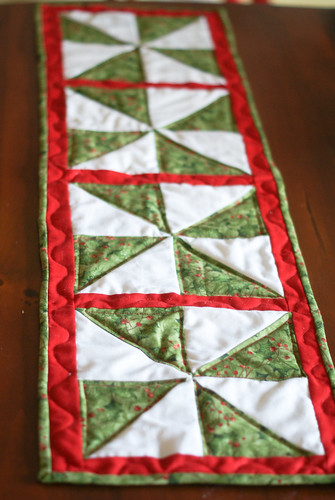
This Christmas runner was for my mother-in-law. I made another one in a different print my my mom, but forgot to take a picture.

 Pinwheel Christmas Runner 
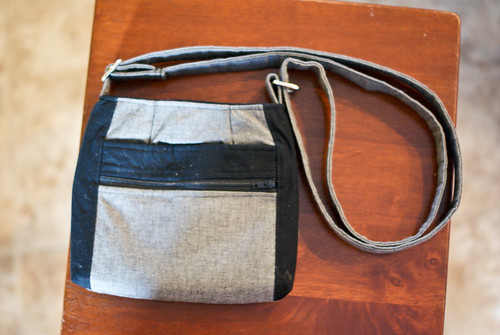
This bag was for my sister Katie. I actually bought a pattern for this one, which I rarely do, but in this case it was totally worth it. Terrible picture, but I'll definitely be making another one like this for me. I scaled the pattern down for Katie's purse, but the original pattern, the two zip hipster, can be found here

Katie's bag 
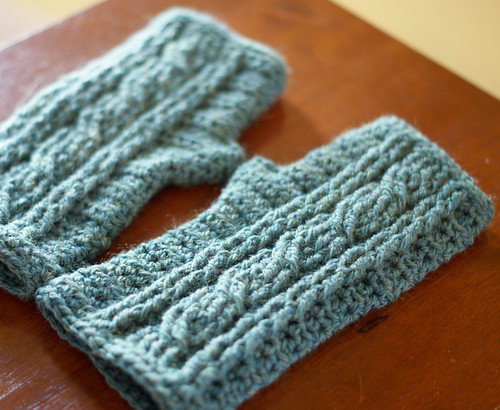
Some wool wrist warmers for my sister Hannah: 

Wool wrist warmers 
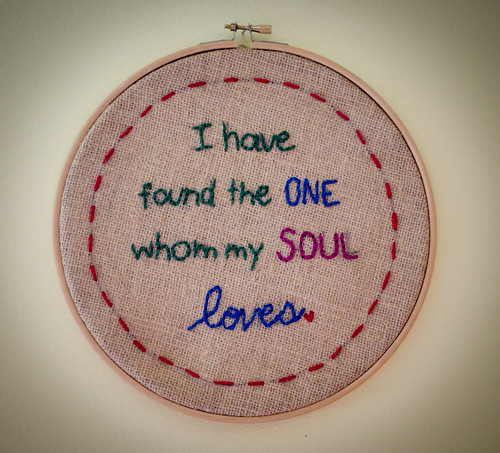
This was my first time experimenting with crocheted cables and it couldn't have been easier. This was for my sister and her almost-fiance, a quote from Song of Solomon: 

"I have found the one" embroidery 
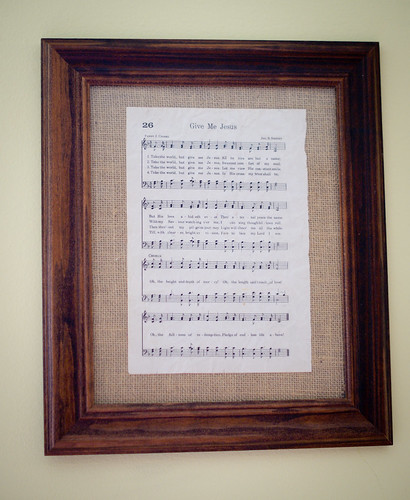
And a framed hymn for said almost-fiance (his favorite): 

Framed Hymn 

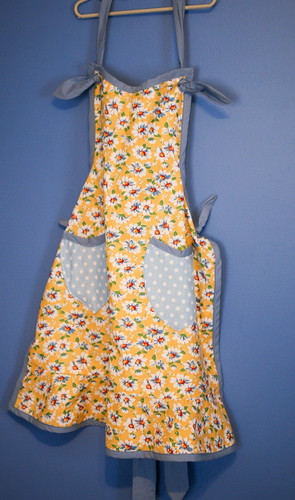
An reversible apron and matching hot pad for my sister Rosie: 

Vintage Inspired Apron
(Tutorial is here. The end result was fantastic, but it was a pain.in.the.butt.)

 Modern pinwheel pot holder 

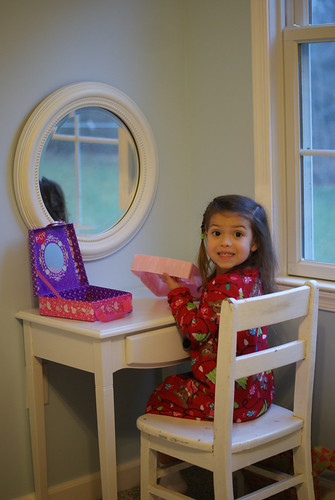
I didn't really do much homemade for the kids this year, but I did refinish a little table for Maddie to use as a vanity. She looooves it and uses it every day, so that was a win!

 Maddie's vanity 

I was pretty crafty this year with my home decor this year and finally made new stockings for the four of us. But I'll wait until Christmas time to share those - no one feels very Christmassy in January! Alrighty! Signing off for what I hope is not another 6 months...

Molly

Thursday, July 12, 2012

Bandana Stick Horse Tutorial

So...4 months later...here is that stick horse tutorial. It's a little bare bones and there are a TON of ways you could spruce this up and make it sturdier or cuter, but this will give you the basic idea. These took me about 30 minutes a piece, but I did all of mine at the same time, so it would take longer than that to just make one. 

Photobucket

My cousin and I made another batch for our booth at Plow Days this year and made a few modifications that I'm going to note as I go along. 

Photobucket

Supplies:
1 Dowel Rod - I got mine at Hobby Lobby, there are all different sizes, I just went for the cheapest I could go without it feeling like it could potentially snap. If you have an old broom handle hanging around, that works too!
1 bandana - Again, I picked this up at Hobby Lobby for $.99
2 yds. Coordinating ribbon
Google eyes - I think a pack of 16 was around $2.50 - Cute buttons would be adorable as well!
Small amount of felt - You can pick up a square of felt for $.25 at most craft stores.
Poly fill - I cut open a couple old pillows for my stuffing - that really helped keep the cost down!
Yarn 
Hot glue gun
Matching thread and needle
Rope or cord - If you are feeling ambitious and want to add reins....

Okay, so I didn't take the time to scan in the pattern I used, because it's very simple and if you can draw a stick person, you can draw this. To get the scale right, fold your bandana in half like a triangle. You'll need two sheets of paper for the pattern. You want the pattern to go all the way to the edges of the bandana. Okay, here's the picture, because hopefully that will make what I just said make sense. :)

Photobucket

Now trace your pattern onto the folded bandana and cut out, positioning the pattern in the position shown above.

You will also need to cut out two ears from your felt. Cut out a triangle and then lop the top off of it. That would be called a...trapezoid? I've been out of school for too long. 

Photobucket

To cut your ribbon, measure from the end of your horses nose diagonally to the top of his head. Cut three of this length.

Photobucket

Here's the fun part! Grab a book or another flat rectangular object (I used the lid to a plastic bin) and begin wrapping your yarn around it. 

Photobucket

Wrap it about 75 times around. The more times you wrap, the thicker the horses mane will be...but the harder it will be to sew, so you have to find that balance. 75 times was just about right. Also, the wider your book, the longer the mane will be, so keep that in mind as well.

Photobucket

Now you need to decide whether you are going to hot glue the bridle on the horse after construction or sew it on. I hot glued the ones I made for the kids party, but I sewed the one I made for Plow Days and it's really a MUCH better idea. Don't have any pictures of that, but basically, you are going to take your two head pieces and lay your ribbon on the head and pin. Make sure they line up on both sides. Sew down both sides of the ribbon. 

If you are sewing button eyes, now is the time. Don't forget you're going to lose about 3/4 inch when you sew the mane in , so don't do it too close to the edge. 

Same story with the ears. I hand-sewed mine (see below) but the 2nd time around I machine stitched them and I liked it better. Here's how I did it: Fold the ear in half lengthwise. Position the ear with the point facing DOWN and stitch as close as you can get to the edge of the felt. I positioned mine about 2 inches below the top edge of the horses head. Then flip the ear up and stitch again. That ear isn't going anywhere!

Sorry I don't have pictures of those steps, if you have questions - feel free to leave them in the comments and I'll try to answer them there.

Okay, back to the mane. VERY carefully, slide the wrapped yarn from the book. Do this right near your machine so there is no chance of it falling apart (says the voice of experience). Sew straight down the center of the looped mane. You want to end up with a mane about 12-18 inches long, so go slow and adjust accordingly.

Photobucket

Photobucket

Now you are going to fold your mane in half along the seam you just made and position it on the RIGHT side of the horses head.

Photobucket

Sandwich it between the other horse head piece, right side DOWN.

Photobucket

Pin generously and then sew around the edge of your horses head, leaving only the neck hole open. It's going to be a PAIN to sew around the mane, especially if your want a nice thick mane. Go slow and don't cuss too much.

Photobucket

Reinforce at least the mane portion of the horse with a zig zag stitch.

Photobucket

Flip your horse right side out. Yay! We're almost done!!

Photobucket

Now take a pair of scissors and cut all the loops out of the horses mane.

Next, we get to stuff the horse! Don't under stuff - especially through the nose. Floppy horses can't run fast. ;)

Now that your horse is all stuffed, we are going to give him legs! Or...at least a body. Grab your dowel rod and wrap a piece of felt around the end. This will prevent the stick from making it's way through the fiber fill and poking a hole through the fabric. 

Photobucket

Stick the rod into the fiberfill and position it so it feels secure but not so that the top of the rod is touching the top of the horse. If you fill the horse adequately, it will be easier.

Use your hot glue gun and put a good amount of glue on the stick where it meets the fabric. Squeeze the fabric around the glue to attach. Don't burn your hand!

Photobucket

Wrap a length of yarn around the bottom of the horses head to help secure. Use a dab of hot glue to secure end.

Photobucket

I added a mouth by looping some heavy duty thread around the snout several times. Like this:

Photobucket

Photobucket
 
If you added the bridle, ears and eyes before assembling, you could call it a day! If not, fire up that glue gun and start gluing!

Photobucket

You can use the third piece of ribbon to wrap around the snout. Or not. Your call. If you decide to add reins, stick the ends under this piece.

If you are hand sewing the ears, position them and use a whipstitch to secure.

Photobucket

You're done! Easy peasy, right? Now hand your adorable stick horse to your favorite cowboy or cowgirl and watch them ride off into the sunset!

Photobucket

Molly

Friday, January 13, 2012

Library Totes

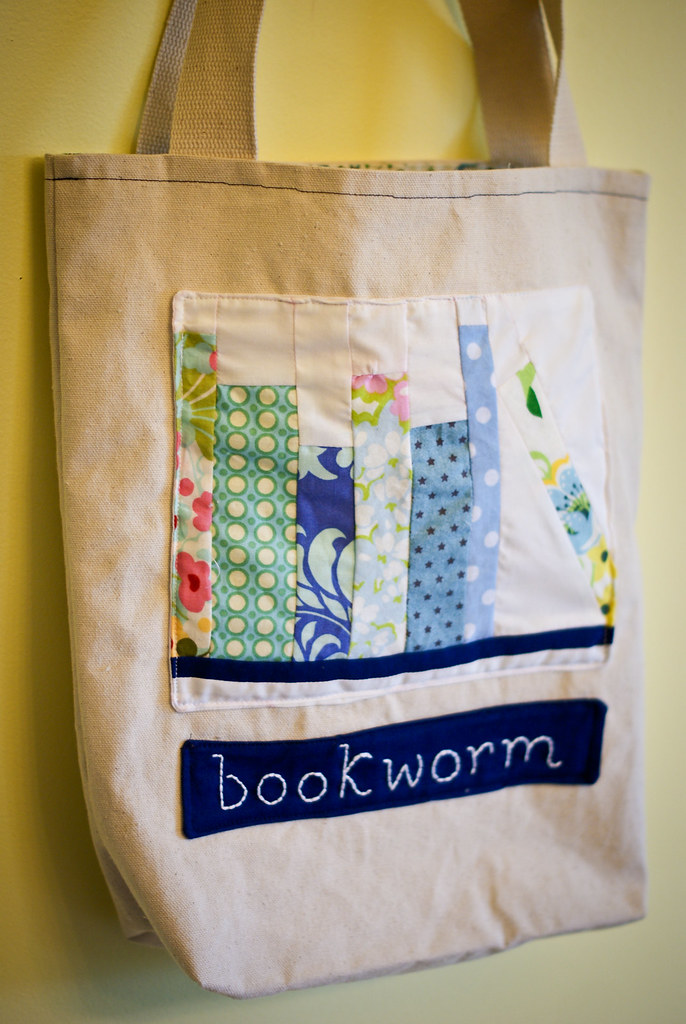
I made these totes for my little sister and niece for Christmas and I just love how they turned out. Siera is a little bookworm, so this bag was made just for her many trips to the library. I used this tutorial and it was easier than I anticipated. Great way to use up some scraps!

Bookworm library tote

Bookworm library tote

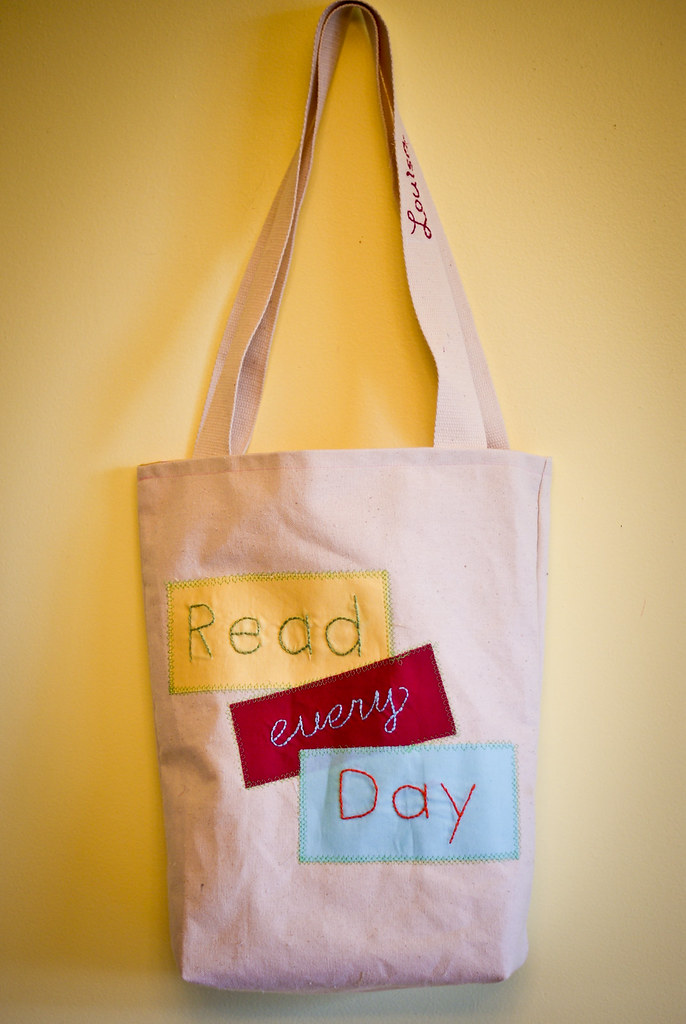
Louisa's was a little simpler. I just used scraps of fabric in bright colors, hand embroidered the words and attached them to the front of the bag with some fusible webbing and then permanently attached them with a decorative stitch in contrasting thread.

Library tote

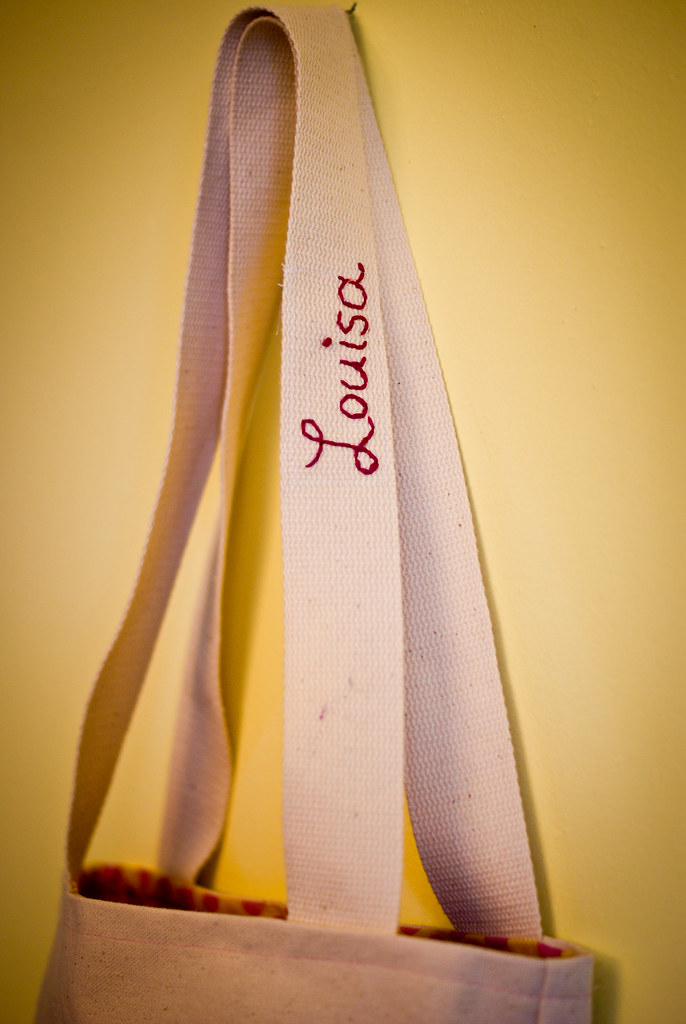
I also hand embroidered each girls' name on the shoulder strap. I love the little things like that that make a big impact.

Library tote

The girls both totally loved their new bags (which each had a new book inside, of course) and I'm already mulling different themed bags I can create. The bag itself was just a basic tote, tutorials are a dime a dozen all over the web. I used canvas straps that can be purchased by the yard from your craft store.

I was seriously off pace from last year's homemade Christmas, but I did squeeze in a few other homemade gifts. You can check them out over on my flickr stream.

I'm in the midst of some health issues that should hopefully be resolved quickly so I can get back to crafting! The next thing on my list is homemade goodies for the kids joint birthday parties next month. I'm certain I'm more excited about it than them. :)

Molly

Monday, April 25, 2011

Sunday Bonnet Tutorial

Every little girl needs a bonnet - even if it's just to play dress up with!


I made this bonnet for Madeline for Plow Days, but then tweaked the pattern and added some ruffles and piping for these babies:

Photobucket

These are really super easy and I'm even going to show you how to shir with elastic thread and make your own piping! As always, I probably included more pictures and instructions than necessary - I know from experience that there is nothing more frustrating than following a tutorial and thinking "I wish they had a picture of that! I have no idea what that means!". As always, feel free to leave questions in the comments, I'll answer them there.


This bonnet will fit most little girls from 2-5 years old.


Ready, set - let's go!

Materials

1/2 yard main fabric
1/4 yard (or less - you may be able to get away with using scraps if you piece strips together, I actually used jelly roll strips I had on hand) trim fabric
elastic thread
thread to match fabric
light to medium weight iron on interfacing
chunky yarn or petite piping

Cut:

From Main fabric:
15 x 15 - cut one
3.5 x 14 - cut two for brim
3.5 x 20 - cut two for ties (alternately, you could use the trim fabric for the ties)

From trim fabric
2.5 x 30 (ish) - cut one for brim ruffle (it's not super crucial to have a particular length here - just as long as it's double your brim length)
1 x 15 - cut one for piping

From interfacing
3.5 x 14 - cut two for brim

Photobucket

1. Fuse your interfacing pieces to the wrong side of the two brim pieces. This will make your bring a little stiffer and not quite so floppy.

Photobucket

2. Using a bowl or other round object - cut a curve into the short end of your brim pieces. (tip: fold the fabric in half length-wise for matching curves.)

Photobucket
3. Repeat with your main bonnet piece.

Photobucket
4. Fold your ruffle piece in half, wrong sides together and iron.

Photobucket

5. Fold your tie pieces in half - right sides together - and iron in half. Fold one short end down at a 45 degree angle (is that right?) and iron. Cut the end of the tie off on the line you just made with your iron, creating a pointed end.

Photobucket

Photobucket

6. Sew your ties together, leaving the short, non pointed end open for turning. Clip corners, turn and iron flat.

Photobucket

7. Grab your ruffle strip and topstitch along the folded edge.

Photobucket

8. Set your stitch length as long as it will go and sew a basting stitch 1/4 inch from the raw edge. Do not backstitch.

Photobucket

9. Pull the bottom bobbin thread to gather your ruffle. You want to gather it as long as the rounded edge of your brim.

Photobucket

10. Line up the raw edge of the ruffle with the rounded raw edge of one of your brim pieces. Sew onto brim piece using a 1/2 inch seam allowance.

Photobucket


11. Place second brim piece over the first brim piece, sandwiching the ruffle piece inbetween them. Pin. Use the stitches from the first brim piece as a guide, sew pieces together.

Photobucket

12. Turn and press.

Photobucket

Piping mini-tutorial

You can skip this step, but the piping really does turn a plain jane bonnet into something a little more special. You could also pre-made piping. Here's how to easily make your own.

I just wanted very small piping, so I used some 8 ply yarn I had on hand.

Iron your 1 inch strip in half

Photobucket

Place your piping (or yarn!) inside the strip in the fold you just created with your iron.

Photobucket

You can use a zipper foot for this step (and you would certainly want to if you ever make larger piping), but I find that using my regular presser foot is fine for small piping like this. Sew as close to the piping as possible, sandwiching the piping in the strip of fabric.

Photobucket

Viola! Piping!


Photobucket

14. Pin your piping on the brim piece, raw edges together. Turn your piping under when you get to where the brim meets the ruffle, as shown in the pictures below and sew onto brim, using the original stitches in piping as a guide.

Photobucket

Photobucket

15. Take your main bonnet piece and iron the bottom straight edge under 1/4 inch and then again another 1/4 inch. Stitch.

Photobucket

16. Iron the sides of the main piece (just up to the curve) under 1/4 inch and then again another 1/4 inch. Stitch.

Photobucket

17. Set your stitch length to the longest it will go and sew around the entire curved edge (3 sides). Sew the stitches on the inside of the finished edges you just sewed - otherwise you won't be able to gather the stiches.

Photobucket

18. Gather the stitches.

Photobucket

19. Pin the bonnet piece to the brim piece, right sides together (piping is sewn on the right side) and raw edges alined. Leave 1 1/2 inches of the main bonnet piece on each end of the brim, as shown in the pictures below.

Photobucket

Photobucket

20. Using a 1/2 inch seam allowance, sew brim and main piece together, using the stitch line from piping on the wrong side of brim piece as a guide.

Photobucket

21. Trim away excess fabric and use a zig zag sitch to reinforce the seam.

Photobucket

Photobucket

Mini shirring tutorial

By using elastic thread in your bobbin, you can create a stretchy stitch that creates a faux smocked look. It's super easy and a great way to create shape.


Photobucket

Thread your thread through the hole in the top of your bobbin and carefully wind the thread around the bobbin by hand.

Photobucket

Photobucket

You don't want to wind it too tight or too loose. When you are finished, it should look something like this:

Photobucket

Load your bobbin as you normally would.

Photobucket

22. With your elastic thread loaded on your bobbin, set your stitch length to it's longest setting and sew three lines into the neck of the bonnet - each 1/4 inch apart, backstitching at the beginning and end of each row. You may need to stretch your fabric out flat when you are sewing your 2nd and 3rd row.

Photobucket

23. Attach your ties by folding the raw end under and stitching to the inside of the neck of the bonnet, right over the shirring rows.

Photobucket

24. Take your bonnet to the iron and steam the shirred rows. The steam shrinks the elastic thread and gives you a nice tightly shirred look. Here's a before and after picture - cool, huh?

Photobucket

Photobucket

Now stick your adorable new bonnet on your favorite little person and admire your handiwork!

Photobucket

Photobucket

Photobucket


I'd love to see a picture if anyone attempts a bonnet from this tutorial!


Molly


The Girl Creative